≈ Comments Off on Past BGSU Student Jo Enger Arthur, Story, Legacy, and Study Abroad Scholarship
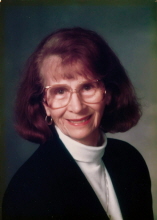
The Jo Enger Arthur Scholarship for Study Abroad encompasses a love of history, Europe and European language, and international studies, along with a strong passion for travel. This scholarship commemorates Jo Arthur, her life, legacy, and love of family and learning, especially about other people and their cultures.
A few weeks ago we featured a crossword by Tim Beatty, a retired teacher and alum. Tim Beatty grew up in Swanton, Ohio, forty minutes northwest of Bowling Green. He attended Bowling Green State University (BGSU) between 1969 and 1976, earning both his Bachelor’s and his Master’s in history and American Culture Studies. He remembers fondly Robert Twyman as one of his history professors, enjoying the courses he taught.
≈ Comments Off on BGSU History Students, Alum at the 2024 Ohio Academy of History!
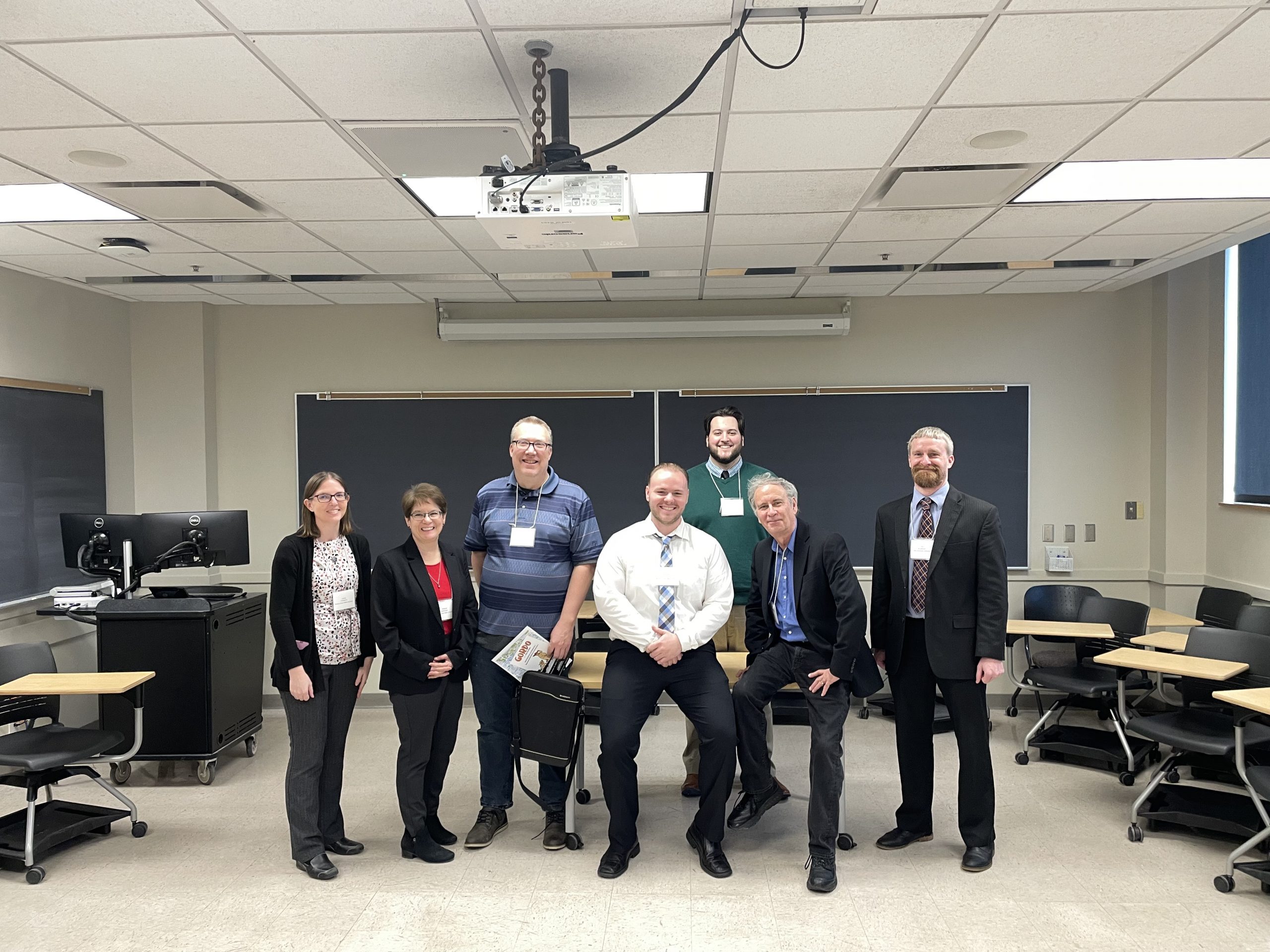
BGSU history faculty, students, and alumni attended the Ohio Academy of History Meeting last Friday and Saturday.
Dr. Mancuso and Dr. Martin attended to support grad students giving papers (Dr. Mancuso also gave an interesting paper on the history of hazing at BGSU). Chase Fleece, Chloe Kozal, McKade Schultz, and Andrea Freimuth (ACS) all gave excellent papers, as did Sara Butler-Tongate (University Archives). It was also good to see department alums attending and presenting papers. Don Eberle (PhD) and Jacob Mach (ABD, Purdue) gave well-received papers, and we also ran into Chris Blubaugh (MA).
Let’s look forward to next year’s OAH at Kent State!
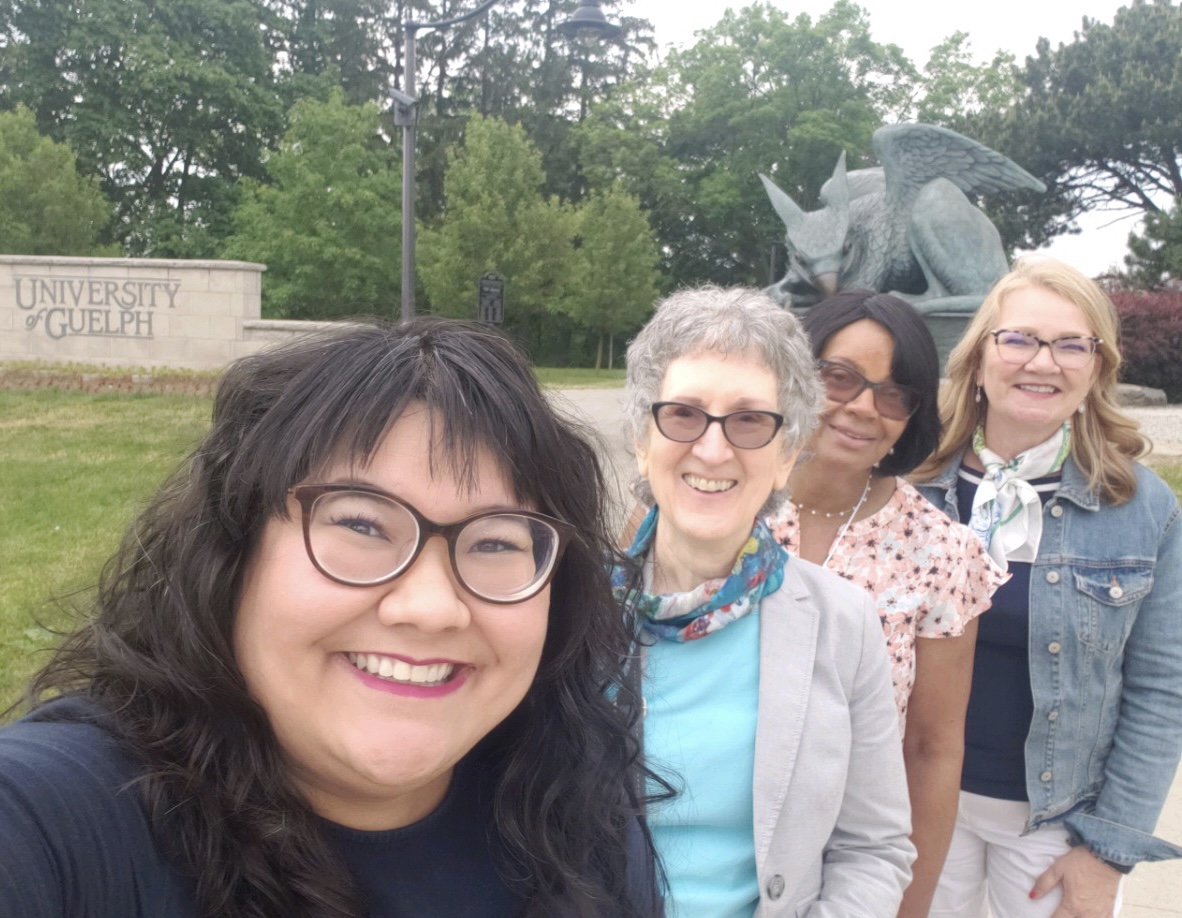
Dr. Lamson, Dr. Herndon, Dr. Green and Dr. Eisel pose for a photo at The University of Guelph.
Four historians, all alumnae of BGSU’s Department of History, made presentations and renewed collegial ties earlier this month at a conference organized by the Society for the History of Children and Youth (SHCY) and hosted by the University of Guelph in southern Ontario.
Authored by Emma Brown (B.A. History, Media Production at BGSU, graduated December 2022)
Two years ago in April of 2021, I got an email from a professor I’d only ever had through an asynchronous class. It was the end of a school year spent fully online and this email was an opportunity I could only dream of. The absolutely incredible Dr. Melissa K. Miller of the political science department was working on a documentary and wanted me to be a undergraduate researcher that summer. The documentary was looking at Trailblazing Women in Ohio politics and with my history major and media production minor she thought I would be a perfect fit with the three other undergraduate researchers. Of course, I accepted!
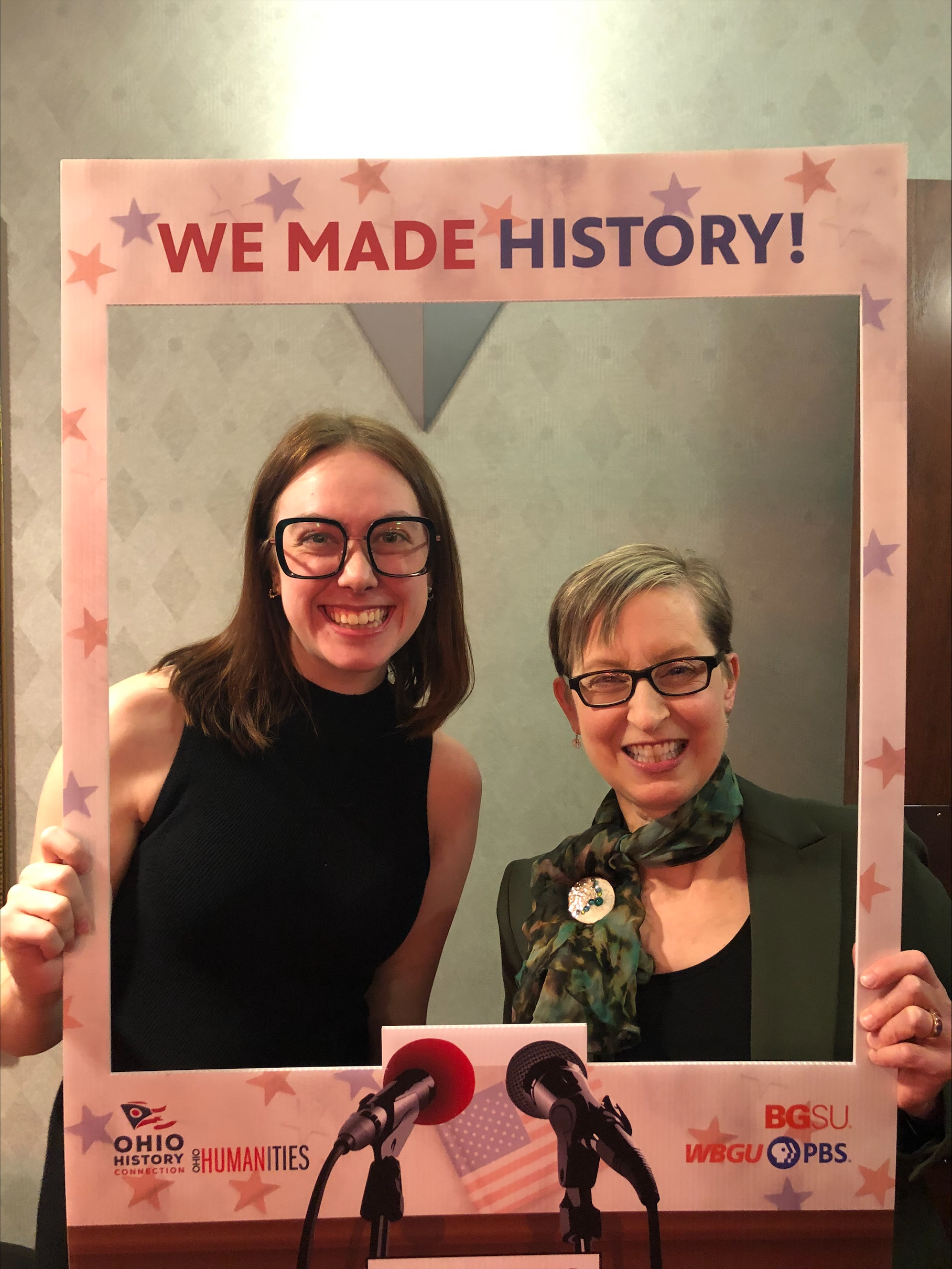
Emma Brown and Dr. Miller at the Maumee showing of the documentary in March ’23Continue reading →
As the Gary Hess Lecture approaches and our speaker, Bill Allison, is a distinguished graduate of our program, we take the opportunity to share this post of our colleague Dr. Doug Forsyth about the department’s contributions to the field of Policy History —Amílcar E. Challú
Rob Carlock earned an MA in History and a Graduate Certificate in Public History from BGSU in May 2019. This fall, he will enter his second year in the PhD Program in History at George Mason University.
Bowling Green State University was my home for 6 years as I worked my way through my bachelor’s and master’s degrees in history. I then left Ohio to pursue a PhD in history at George Mason University in Fairfax, Virginia, sadly leaving behind a support network and family I had built during my time there. It has certainly been a challenge, especially since my first year has been synchronous online learning due to COVID-19. Although I have yet to meet my peers and faculty in-person, I was able to connect with many of them and begin to forge new relationships. With my peers, my connection is definitely a sense of unity that we are tackling such a daunting task together; with the faculty, my connection is a sense of confidence and support as they encourage me to continue identifying and expanding on my interests.
Author: Brittany Von Kamp, recent graduate from the History M.A. program
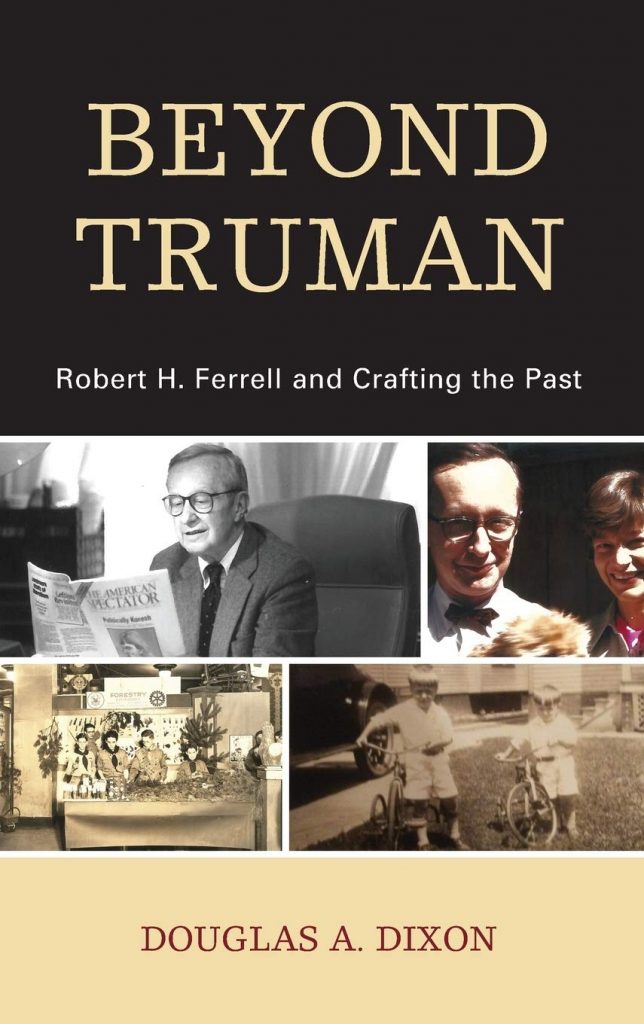
Beyond Truman: Robert H. Ferrell and Crafting the Past (Rowman & Littlefield, 2020)
When pursuing a publisher for
his book manuscript Beyond Truman: Robert H. Ferrell and Crafting the Past
(Rowman & Littlefield, 2020), author Dr. Douglas Dixon responded with a
laugh—that several editors rejected the book’s thrust, saying: “Nobody cares
about historians.” Dixon explained that this was a major hurdle in getting the
book to readers who, in fact, do care about the challenges faced by past masters
in doing history. What challenged
Ferrell, as the field evolved into the twenty-first century was postmodernism,
the New Left, and social and cultural history.
Though Dixon feels Ferrell is an important person to study, the book is
much more than merely a study of this important presidential, diplomatic, and
military historian, though his biography is central to it. Instead, the author
had to find a way to make Ferrell’s world larger than the historian himself, to
fit Ferrell into the larger historical narrative – a task that many historians
face as they write about their own research. In the end, Dixon says that “the
book is not just about Ferrell; it’s about the larger culture of history and doing
history,” particularly in the last half of the twentieth century to the present
day.
Much as historians might want to take an article or conference paper from conception to completion in one semester, in fact we often take longer. Last spring, Dr. Matt Schumann’s rendition of our Historiography course (HIST 3797) won an award for introducing students to key elements and mindsets of the historian’s craft, including an appreciation that their projects might exceed the scope of the class. One student from last Fall’s course, AYA Education major Mr. Benjamin Stuck, has now spent a year on his project, a history of the War on Drugs, and he just received a CURS grant this Fall to support his ongoing research.
In this post, Dr. Schumann asks Mr. Stuck
for some perspectives on his evolving project, where it has been and where it’s
going.